偏平足とハイアーチ:違いは何ですか?
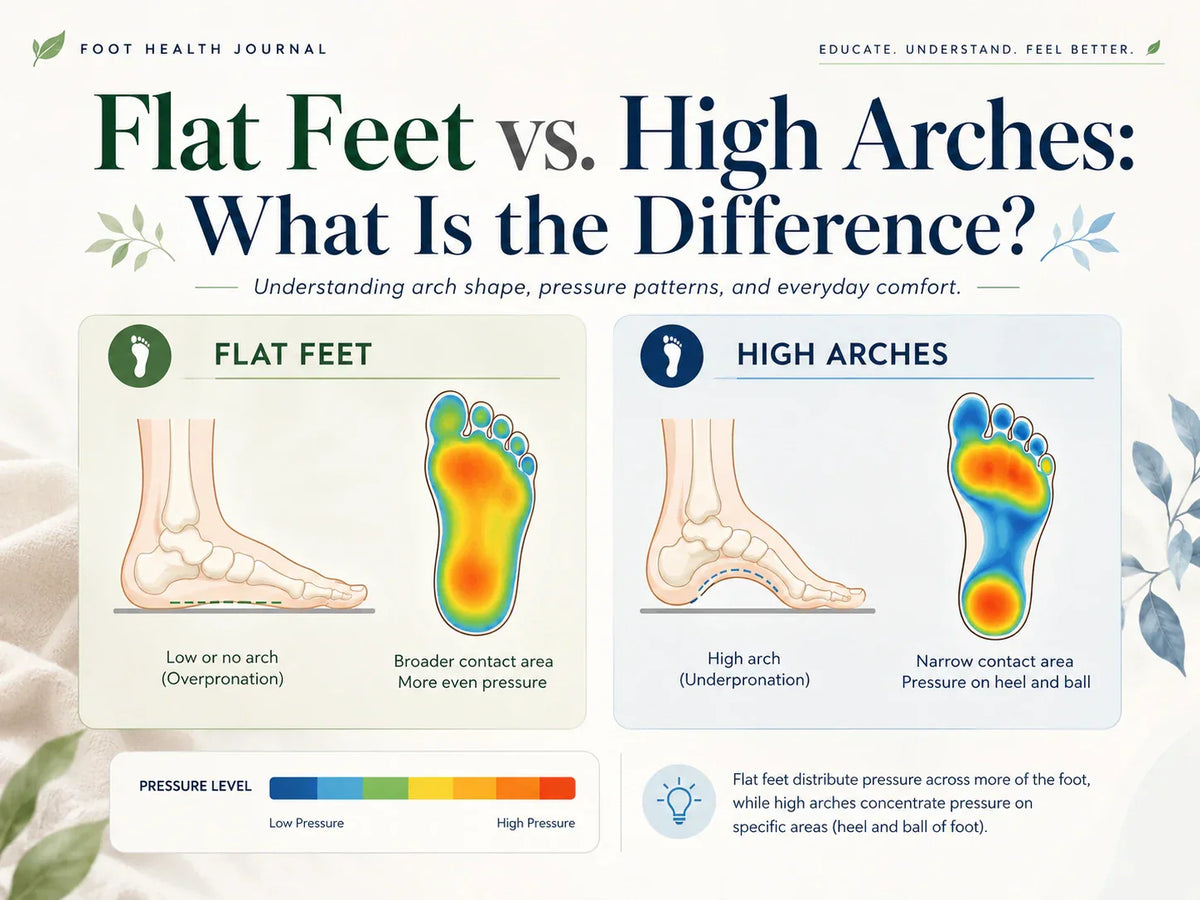


足のアーチは、立ったり、歩いたり、日常の動きの中で圧力を分散させるのに役立ちます。中にはアーチが低い、またはほとんど扁平足の人もいれば、はっきりと高いアーチを持つ人もいます。
どちらの足のタイプも、それ自体が問題になるわけではありません。扁平足やハイアーチの人の中には、完全に快適に過ごしている人も多くいます。しかし、足のアーチの形は、どこに圧力がかかるか、靴がどのようにすり減るか、どのような室内履きが最も快適に感じるかに影響を与える可能性があります。
このガイドでは、扁平足とハイアーチの違い、その特徴、注意すべき兆候、そして日常の家庭でのルーティンで、優しくサポートするスリッパが足をより快適にするのにどのように役立つかを説明します。
足の快適さに関する注意点
この記事は一般的な情報提供のみを目的としており、医療アドバイスではありません。足に慢性的な痛み、急なアーチの変化、しびれ、腫れ、脱力感、歩行困難がある場合は、足病医または他の資格のある医療専門家にご相談ください。

扁平足は、ローアーチまたは落ちたアーチとも呼ばれ、立っているときに足裏のほとんどまたは全体が床に近づく状態を指します。
幼少期から自然に扁平足の人もいれば、時間の経過とともにアーチが低くなることに気づく人もいます。多くの扁平足は痛みがないですが、中には足の疲れ、アーチの不快感、足首の負担、靴の偏った摩耗を感じる人もいます。
完全に平らなスリッパや薄いルームシューズでは足がサポートされていないと感じる場合、緩やかにカーブしたフットベッドの方が、立ったり、料理をしたり、掃除をしたり、家の中を歩き回る際に快適に感じるかもしれません。
ハイアーチは、別名pes cavusとも呼ばれ、かかとと足の前端の間に、より顕著なカーブが形成されます。
足の中央部分が地面に触れる面積が少ないため、かかとと足の指の付け根に圧力が集中しやすくなります。ハイアーチの人の中には、安定感が低いと感じたり、快適な靴を見つけるのに苦労したり、クッション性があり、優しいサポートのある履物を好む人もいます。
目標は、足を一つの「完璧な」形に強制することではありません。目標は、自然な足の構造に安定感、クッション性、快適さを提供する履物を選ぶことです。
主な違いは、足が地面に接する方法と、圧力が足全体に伝わる方法です。
| 扁平足 | ハイアーチ |
|---|---|
| 足裏の広い部分が地面に接触する。 | 足の中央部分の接触が少ない。 |
| 足が内側に傾きやすい。 | かかとと前足部に圧力が集中しやすい。 |
| 緩やかなアーチの輪郭がサポート感を与えることがある。 | クッション性と圧力分散が重要だと感じることがある。 |
| 症状がない人もいる。 | フィット感や安定性に課題を感じる人もいる。 |
扁平足もハイアーチも、人によっては不快感を伴うことがありますが、アーチの高さだけで足が健康的か快適であるかを判断することはできません。快適さは、足全体の形、日常の活動、履物、そして症状の有無によって決まります。

簡単なウェットフットプリントテストで、おおよそのアーチタイプを知ることができます。
このテストはあくまで目安です。痛み、怪我、足の状態を診断するものではありません。症状がある場合は、足跡から推測するよりも専門家による評価がより役立ちます。
薄くて完全に平らなスリッパは、人によっては快適に感じるかもしれませんが、すべての人にとって快適とは限りません。特に、アーチの下にもっと構造的なサポートを求める場合や、かかとと前足部にもっとクッション性を求める場合はそうです。
室内履きを選ぶ際には、以下の点を考慮してください。
アーチサポートは優しく自然な感触であるべきです。足の下に鋭い圧力をかけたり、アーチを不快な位置に強制したりするものであってはなりません。
柔らかな室内用スリッパは心地よいものですが、完全に平らなフットベッドでは、日々の室内での動きに、一部の人が好む構造的な感触を提供できない場合があります。
緩やかに湾曲したインソールを備えたスリッパは、豪華な室内履きの心地よさと、立ったり、料理をしたり、在宅勤務をしたり、家の中を歩き回ったりするための、より安定したベースとを組み合わせることができます。
ぜひお試しいただきたいコレクションは、「Chantomoo レディース アーチサポートスリッパ」です。これらのスタイルは、緩やかに湾曲したフットベッド、豪華な素材、そして安定したソールでデザインされており、毎日の快適な着用をサポートします。
Chantomooのおすすめ
最適な用途:リラックスした朝、在宅勤務、料理、家事ルーティン、完全に平らなスリッパよりも構造的なサポートを好む方。
着用方法:柔らかいパジャマ、お揃いのラウンジセット、レギンス、カジュアルなニットウェア、リラックスした週末着と合わせて。
注目ポイント:このコレクションは、クッション性と緩やかなアーチの輪郭を、ルームスリッパに期待される暖かく豪華な感触と組み合わせています。
アーチサポートスリッパを探す
快適さは個人的なものです。最適なスリッパは、室内履きに何を求めるかによって異なります。
| 好み | 探すべきポイント | 良い出発点 |
|---|---|---|
| 平らなスリッパが嫌い | 緩やかなアーチの輪郭と安定した土台 | アーチサポートスリッパコレクション |
| 家事の最中に足が疲れる | メモリーフォームクッションとサポート構造 | HODY サポーティブアーチスタイル |
| 一日のうちに足のサイズが変わる | よりパーソナライズされたフィット感のための調節可能なストラップ | 調節可能なオープントゥスタイル |
Chantomooの快適さ
クッション性のある快適さ、緩やかに曲線を描くフットベッド、安定したソールでデザインされた、普段使いの室内用ふわふわスリッパをご覧ください。
アーチサポートスリッパを見る扁平足やハイアーチは、それ自体が問題になるわけではありません。しかし、症状が日常生活に支障をきたす場合は、専門家のアドバイスが役立つかもしれません。
以下の症状に気づいた場合は、足病医または資格のある医療専門家にご相談ください。
扁平足とハイアーチでは圧力の分散の仕方が異なりますが、アーチの高さだけで足が健康か快適かを判断することはできません。
適切な室内履きは、足の形に合い、快適に感じられ、クッション性、安定性、そして優しいサポートの適切なバランスを提供する必要があります。
家で過ごす時間には、緩やかに湾曲したフットベッドのスリッパを選ぶことが、完全に平らな室内履きのシンプルな代替品となります。特に、柔らかく、安定していて、日常のルーティンで履きやすい心地よいスリッパを求める方におすすめです。
扁平足は足裏が地面に広く接触するのに対し、ハイアーチはより顕著なカーブを持ち、中足部の接触が少ないです。それぞれのタイプは、足全体に圧力がどのように伝わるかに影響を与える可能性があります。
必ずしもそうではありません。扁平足の多くの人は痛みや問題を感じていません。扁平足が不快感、疲れ、不安定感、または歩行困難を引き起こす場合は、専門家のアドバイスが役立つかもしれません。
必ずしもそうではありません。ハイアーチの人の中には快適に過ごしている人もいますが、かかとと前足部に圧力を感じたり、安定感が低かったり、快適な靴を見つけるのに苦労したりする人もいます。
完全に平らなスリッパが薄すぎると感じたり、不安定だったり、サポートが足りないと感じる場合は、アーチサポートスリッパを好むかもしれません。サポートは優しく感じるべきであり、鋭い痛みや不快感を与えるものであってはなりません。
緩やかに湾曲したフットベッド、かかとと前足部のクッション性、安定したソール、十分なつま先のスペース、そして普段使いの室内履きとして快適に感じる柔らかなアッパーを探してください。
いいえ。スリッパは扁平足、ハイアーチ、または医療上の足の状態を治療したり治癒させたりするものではありません。サポート力のあるスリッパは、一部の家庭でのルーティンでより快適に感じるかもしれませんが、持続的な症状がある場合は、資格のある専門家と相談してください。
女性は疲労骨折を起こしやすい可能性があるため、適切なスリッパを選ぶことは単に快適さだけでなく、より重要です。良いスリッパは、歩行時の衝撃を和らげ、足をサポートし、家庭での日常的な動きを体への負担が少ないものにするのに役立ちます


