What Slippers Are Good for Standing on Hardwood or Tile Floors?
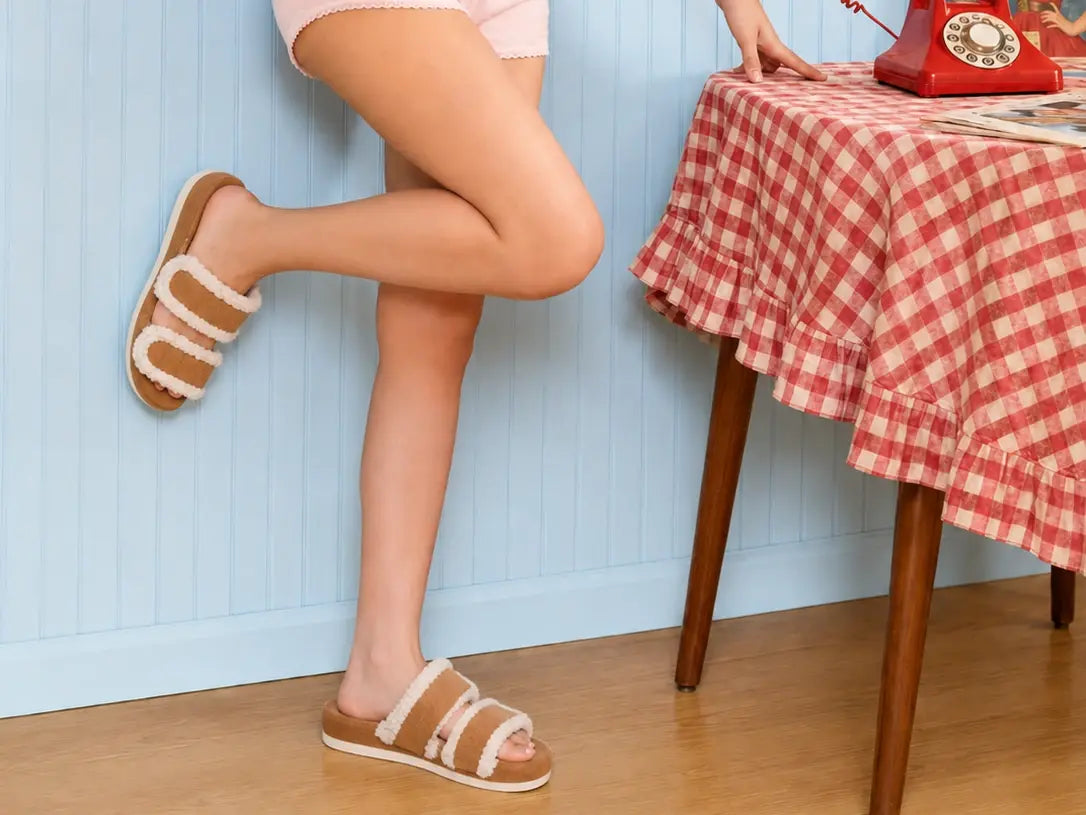


Hardwood and tile floors look beautiful, but they can feel unforgiving when you spend a lot of time standing or walking around the house. If you cook, clean, work from home, do laundry, or simply spend most of the day on your feet, a thin pair of house slippers may not provide the kind of comfort you want.
The best slippers for standing on hardwood or tile floors usually combine cushioning, a supportive footbed, a stable lightweight sole, good traction, and a secure fit.
Memory foam can make hard floors feel softer underfoot, while a contoured or supportive footbed can provide more structure than a completely flat slipper. A thicker EVA or similar lightweight sole can also create more separation between your feet and the floor.
For example, the Chantomoo HODY Memory Foam Slippers — Supportive Arch Edition combine memory foam cushioning, a supportive arch footbed, and a lightweight 1.38-inch EVA platform, making them one option for women who spend a lot of time moving or standing around the house.
Unlike carpet or padded flooring, hardwood, ceramic tile, stone, laminate, and similar surfaces provide very little cushioning on their own.
When you stand at the kitchen counter, prepare meals, fold laundry, work at a standing desk, or walk repeatedly between rooms, the floor beneath you stays firm. That is why slippers that feel perfectly comfortable for a few minutes may feel less comfortable after you have been standing for much longer.
For hard flooring, it helps to think of slippers less like a soft covering for your feet and more like lightweight indoor footwear.
The goal is not simply to find the softest slipper. The better choice is usually a slipper that balances soft cushioning with enough structure and stability for everyday movement.
If your home has mostly hardwood or tile flooring, these are the features worth paying attention to.
Cushioning is one of the first things you notice when stepping from a hard floor into a comfortable slipper.
Memory foam is popular because it compresses under the foot and creates a softer step than a very thin, flat footbed.
However, more softness is not always better. An extremely soft slipper that collapses completely under your weight may feel cozy at first without providing much structure during longer periods of standing.
Look for a balance between cushioning and support.
Many inexpensive house slippers are almost completely flat inside. That may be enough for short trips around the bedroom, but people who spend hours wearing slippers at home often prefer a footbed with more shape.
A gently contoured footbed or supportive arch area can create a more structured feeling beneath the foot while still keeping the relaxed character of a house slipper.
Sole thickness matters more on hard surfaces than many people realize.
A very thin sole allows you to feel more of the hardness of tile or wood beneath every step. A thicker but lightweight sole creates additional separation from the floor.
This does not mean you need an extremely tall or heavy platform. The key is finding enough cushioning without making the slipper bulky or difficult to walk in.
Smooth hardwood and tile can become slippery, especially in kitchens, bathrooms, entryways, or anywhere small amounts of moisture may reach the floor.
Look at the outsole rather than focusing only on how soft the inside feels. A practical house slipper should have an outsole designed to provide everyday traction on common indoor surfaces.
Cushioning does not help much if your foot constantly moves inside the slipper.
The upper should hold the foot comfortably without squeezing it. If you have a higher instep, wider forefoot, or notice that the fit of your feet changes throughout the day, an adjustable slipper may be particularly useful.
| Slipper Type | Best For | What to Look For |
|---|---|---|
| Memory foam + supportive footbed | Longer periods of standing and everyday home wear | Cushioning combined with structure rather than foam alone |
| Adjustable slippers | High insteps, changing fit preferences, or anyone who wants more control over fit | Adjustable straps plus a cushioned or contoured footbed |
| Lightweight platform slippers | Hard tile, hardwood, laminate, and kitchen floors | Adequate thickness without excessive weight |
| Thin flat slippers | Short periods of wear or people who prefer minimal footwear | Flexible outsole and sufficient traction |
If your main concern is making hardwood or tile floors feel more comfortable during everyday home routines, the Chantomoo HODY Memory Foam Slippers — Supportive Arch Edition are designed around several of the features that matter most on hard flooring.
This combination makes HODY particularly suited to everyday activities such as making breakfast, standing in the kitchen, working from home, cleaning, getting ready in the morning, or moving between rooms throughout the day.
It is not simply a soft bedroom slipper. The design combines the relaxed feeling of a house slipper with more cushioning and structure beneath the foot.
View Chantomoo HODY Supportive Arch Slippers →
Cushioning is only part of comfort. The upper also needs to fit your foot properly.
Some people find that fixed-strap slippers feel comfortable in length but tight across the top of the foot. This can be especially noticeable if you have a higher instep or simply prefer more room.
In that situation, an adjustable design may make more sense.
The Chantomoo Slowday Adjustable Slippers use two independently adjustable straps, allowing the fit across different areas of the foot and instep to be loosened or secured separately.
They also combine a gently contoured footbed with memory foam cushioning and a lightweight sole.
That makes Slowday worth considering if your priority is both hard-floor comfort and an adjustable fit.
View Chantomoo Slowday Adjustable Slippers →
| Feature | HODY Supportive Arch Edition | Slowday Adjustable |
|---|---|---|
| Best for | Everyday cushioning and support on hard floors | Customizable fit plus cushioning |
| Cushioning | Memory foam | Memory foam |
| Footbed | Supportive arch footbed | Gently contoured footbed |
| Upper fit | Fixed cross-band | Two adjustable straps |
| Choose this if... | You want a simple slip-on with cushioned support | You often find slipper uppers too tight or too loose |
Memory foam can be a good choice for hardwood floors because it creates cushioning between the foot and the firm surface beneath it.
But memory foam should not be the only feature you consider.
If you spend a lot of time standing, look at the complete construction of the slipper:
A slipper that combines these characteristics will generally make more sense for extended home wear than choosing a pair simply because the product description says “memory foam.”
A thicker sole can be especially useful on tile because tile tends to feel both hard and cool underfoot.
Additional sole thickness creates more material between your foot and the floor, but thickness alone does not determine comfort.
A very heavy or rigid platform may feel awkward indoors. For most people, a lightweight cushioned platform provides a better balance for normal household movement.
This is one reason lightweight EVA is commonly used in casual footwear and slippers: it can provide thickness and cushioning without requiring a heavy outsole.
Kitchens are one of the places where hard-floor comfort matters most.
You might stand in one place while preparing vegetables, washing dishes, cooking, baking, or cleaning counters. Unlike walking continuously, prolonged standing keeps pressure concentrated for longer periods.
For kitchen use, prioritize:
Extremely loose, oversized, or very thin slippers may be less practical if you frequently move between the counter, sink, refrigerator, and stove.
Working from home does not necessarily mean sitting all day.
You may move between your desk and kitchen, use a standing desk, take calls while walking around the house, or spend more time on hard indoor flooring than you realize.
If your slippers become your everyday indoor footwear, choose them accordingly.
A cushioned footbed, stable sole, comfortable fit, and enough structure for repeated movement become more important than they would be in a slipper worn only for a few minutes before bed.
Not necessarily. The same core features work well for both surfaces.
For hardwood floors: cushioning, quiet movement, lightweight construction, and traction are useful priorities.
For tile floors: cushioning and sole thickness can feel particularly important because tile is very firm and may also feel colder underfoot.
In both cases, a well-fitting slipper with a cushioned footbed and stable outsole is generally more versatile than an extremely thin bedroom slipper.
There is nothing inherently wrong with thin slippers. Some people prefer a minimal, flexible feeling.
They can work well for short periods of wear, soft flooring, bedrooms, travel, or people who simply prefer less material underfoot.
But if your specific problem is that hardwood or tile feels too hard while you stand for long periods, a thin flat slipper may not address the feature you are trying to improve.
In that case, look for more cushioning and structure rather than simply replacing one thin slipper with another.
Your heel should sit naturally on the footbed, your toes should not hang excessively over the front, and the upper should feel secure without uncomfortable pressure.
If a slipper is too large, your foot may slide around as you walk. If it is too small or tight across the upper, you may notice pressure even if the footbed itself feels comfortable.
Chantomoo HODY and Slowday are currently offered in the following women's size groups:
| Women’s US | EU | UK | Foot Length |
|---|---|---|---|
| 5–6 | 36–37 | 3–4 | 24 cm |
| 7–8 | 38–39 | 5–6 | 25 cm |
| 9–10 | 40–41 | 7–8 | 26 cm |
| 11–12 | 42–43 | 9–10 | 27 cm |
When choosing any slipper, use your actual foot measurements and the sizing information provided for the specific style rather than relying only on your usual shoe size.
If you spend substantial time standing or walking on hard flooring at home, start with five priorities:
If those are your priorities, the Chantomoo HODY Supportive Arch Edition is a strong option because it combines memory foam, a shaped supportive footbed, and a lightweight elevated EVA sole.
If fit across the top of your foot is the bigger concern, consider the Chantomoo Slowday Adjustable Slippers , which allow you to adjust two areas of the upper independently.
The best choice ultimately depends on your foot shape, preferred fit, flooring, and how much time you spend wearing slippers each day.
Look for slippers with cushioned footbeds, enough sole thickness to soften the feeling of the floor, a stable outsole, good traction, and a secure fit. Memory foam combined with a supportive or contoured footbed can be a useful combination for extended home wear.
Tile is particularly firm, so cushioned slippers with a lightweight but substantial sole are worth considering. Traction is also important because smooth tile can become slippery when wet.
Memory foam provides cushioning, but cushioning should not be the only consideration. For longer periods of standing, also look for a stable sole, secure fit, and a footbed with enough structure for your preferences.
A lightweight platform can provide additional separation from hard flooring. The best indoor platform slippers balance cushioning and thickness without becoming excessively heavy or rigid.
Some people prefer more underfoot structure when standing on hard surfaces for longer periods. A gently shaped arch area can feel more supportive than a completely flat footbed, although the ideal amount of support depends on the individual.
For kitchen use, look for cushioning, a stable and traction-focused outsole, a secure upper, and enough underfoot structure for the amount of time you typically spend standing and moving around the kitchen.
Consider an adjustable slipper rather than simply choosing a longer size. Adjustable straps can provide more control over fit across the foot and instep without unnecessarily increasing the overall length of the slipper.
Hard floors do not mean your house slippers have to feel hard too. Choose the construction that matches how you actually spend your day at home.
Choose HODY if you want memory foam cushioning, a supportive footbed, and a lightweight elevated sole.
Choose Slowday if you want cushioning and support with more control over how the upper fits your foot.
Shop HODY Supportive Arch Slippers | Shop Slowday Adjustable Slippers
Want to learn more about choosing slippers for long periods at home? Read our guide to soft slippers for standing at home .
女性は疲労骨折を起こしやすい可能性があるため、適切なスリッパを選ぶことは単に快適さだけでなく、より重要です。良いスリッパは、歩行時の衝撃を和らげ、足をサポートし、家庭での日常的な動きを体への負担が少ないものにするのに役立ちます


