What Is Memory Foam Made Of? The Science Behind That Cloud-Like Comfort
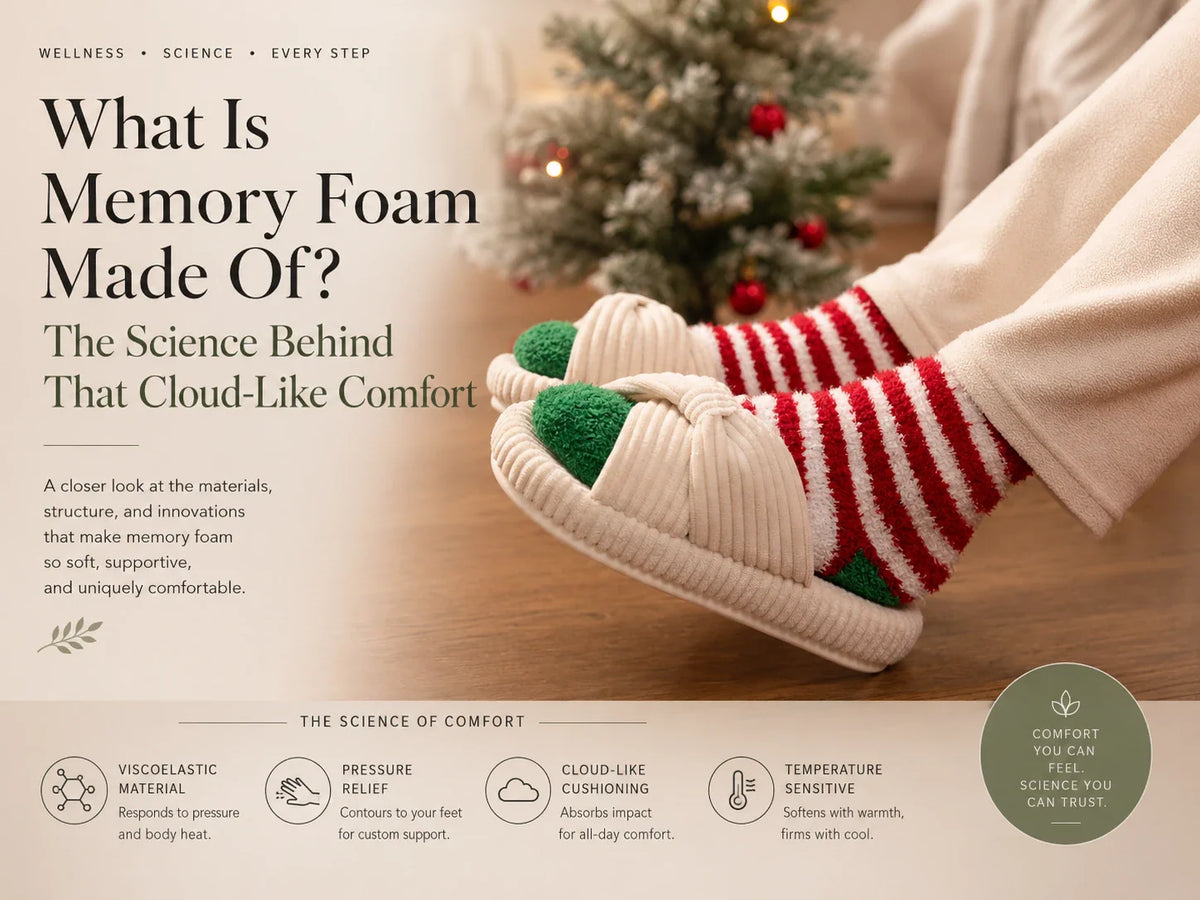


Memory foam has become one of the most familiar comfort materials in modern homes. It appears in mattresses, pillows, seat cushions, and increasingly, in women’s house slippers. But what is memory foam actually made of, and why does it feel so different from ordinary foam?
The answer is partly science and partly everyday experience. Memory foam is designed to respond slowly to warmth and pressure, which allows it to soften beneath the body, gently contour to shape, and then return to its original form after the pressure is removed. For slippers, that means a softer, more personalized feeling underfoot during daily home routines.
Memory foam is a type of viscoelastic polyurethane foam. “Viscoelastic” simply means it has two important qualities at once: it can slowly adapt under pressure, and it can return toward its original shape after that pressure is released.
At its base, memory foam begins with polyurethane, a flexible polymer material. During production, manufacturers adjust the foam’s structure and add ingredients that affect how dense, slow-responding, soft, or supportive the finished foam feels. This is what gives memory foam its signature “slow bounce-back” feeling.
In simple terms: memory foam is polyurethane foam made to respond more slowly and closely to heat and pressure. That slow response is what creates the soft, contouring feel people often associate with premium comfort products.
Ordinary foam usually compresses and rebounds quickly. Memory foam behaves differently. When your foot presses into it, the material softens slightly under warmth and pressure, allowing the surface to shape around the natural curves of the foot.
This is why memory foam can feel especially pleasant in house slippers. Instead of creating one firm, flat surface beneath the foot, it gives a cushioned feeling that adapts gradually as you stand, walk, or relax at home.
| Material Feel | How It Responds | Best For |
|---|---|---|
| Regular Foam | Compresses and rebounds quickly | Light cushioning |
| Memory Foam | Contours slowly under warmth and pressure | Soft, personalized underfoot comfort |
| High-Density Memory Foam | Feels more substantial and supportive | Daily house slippers and longer home wear |
Memory foam has an interesting origin story. The material was originally connected to NASA research into better cushioning and impact absorption. Over time, the same pressure-distributing idea became useful far beyond aerospace research, moving into mattresses, pillows, medical cushions, and eventually footwear.
Today, memory foam is not just about softness. Its value comes from the way it combines cushioning, contouring, and slow recovery. For products used every day, such as slippers, those details can make a noticeable difference in how comfortable they feel after a long day.
Feet go through a lot during the day. Standing, walking, errands, work, cooking, cleaning, and moving around the home all create repeated pressure under the heel, arch, and forefoot. A slipper with memory foam cushioning can help make those everyday steps feel softer and more relaxed.
For women’s slippers, memory foam is especially useful because comfort is not only about softness. A good slipper also needs to feel stable, easy to wear, breathable enough for home routines, and polished enough to feel intentional rather than ordinary.
Chantomoo Comfort Note
HODY Bowknot Memory Foam Slippers bring memory foam comfort into a feminine, design-led house slipper. The soft corduroy upper, graceful bow detail, open-toe shape, and cushioned footbed are made for women who want home slippers that feel comfortable without looking basic.
The high-density memory foam footbed cushions each step, while the 1.38-inch platform adds subtle lift without a bulky feel. A lightweight EVA sole helps the slipper feel quiet and flexible for bedroom, kitchen, living room, and quick outdoor steps.
The HODY bow silhouette is protected under U.S. Design Patent No. US D976,543 S, giving the style a distinctive Chantomoo look that blends comfort with a more polished, gift-ready appearance.
When choosing memory foam slippers, the foam itself is only one part of the comfort experience. The upper material, sole, shape, toe design, and overall fit all affect how the slipper feels in real life.
Softness feels good at first, but a slipper should also feel balanced under the foot. High-density memory foam can create a more substantial cushioned feel for everyday wear.
Slip-on slippers are popular because they are simple to wear throughout the day. An open-toe design can also feel more breathable during year-round home use.
A good house slipper should move naturally with home routines. A lightweight sole helps reduce the clunky feeling that can make some platform slippers feel too heavy indoors.
Comfort matters most, but style changes how often a slipper gets worn. A thoughtful detail, such as a soft bow, textured corduroy, or balanced color palette, can make a pair feel more like part of a daily home ritual rather than an afterthought.
Memory foam performs best when it is kept clean, dry, and properly aired out. Always follow the care instructions for your specific slippers, because upper materials and soles may require different treatment.
Chantomoo HODY Bowknot slippers are designed to be machine washable or hand washed gently. For best results, use cold water, place them in a laundry bag, and air dry only. Do not bleach.
Memory foam is made from viscoelastic polyurethane foam, a material designed to respond slowly to warmth and pressure. That is what gives it the soft, contouring, slow-recovery feel people love in comfort products.
In women’s house slippers, memory foam can make everyday steps feel softer and more personal. It cushions the foot, adapts gently during wear, and adds a relaxed feeling to simple home routines.
For a pair that brings this comfort into a more feminine, design-forward shape, HODY Bowknot Memory Foam Slippers by Chantomoo combine high-density memory foam, soft corduroy texture, a patented bow silhouette, and an easy slip-on design for everyday comfort at home.
Discover the patented HODY Bowknot slipper, designed with soft memory foam cushioning, feminine bow detail, and gift-ready comfort for daily home wear.
Shop HODY Bowknot SlippersYes. Memory foam is a popular choice for house slippers because it cushions the foot and gently adapts under pressure, creating a softer feeling for everyday home wear.
No. Regular foam usually rebounds quickly, while memory foam responds more slowly and contours more closely under warmth and pressure.
HODY Bowknot slippers are designed mainly for comfortable home wear, with a lightweight EVA sole that is also suitable for quick steps outside, such as the porch, garden, or mailbox.
Some memory foam slippers can be washed, depending on the product construction. HODY Bowknot slippers can be machine washed cold or hand washed gently, then air dried only.
Sources:
NASA Spinoff: Forty-Year-Old Foam Springs Back With New Benefits
Product details: Chantomoo HODY Bowknot Memory Foam Slippers
Because women may be more prone to stress fractures, choosing the right slippers is not just about comfort. A good pair should cushion your steps, support your feet, and help make everyday movement at home easier on your body


