Japanese House Slippers: Names, Types and Home Etiquette
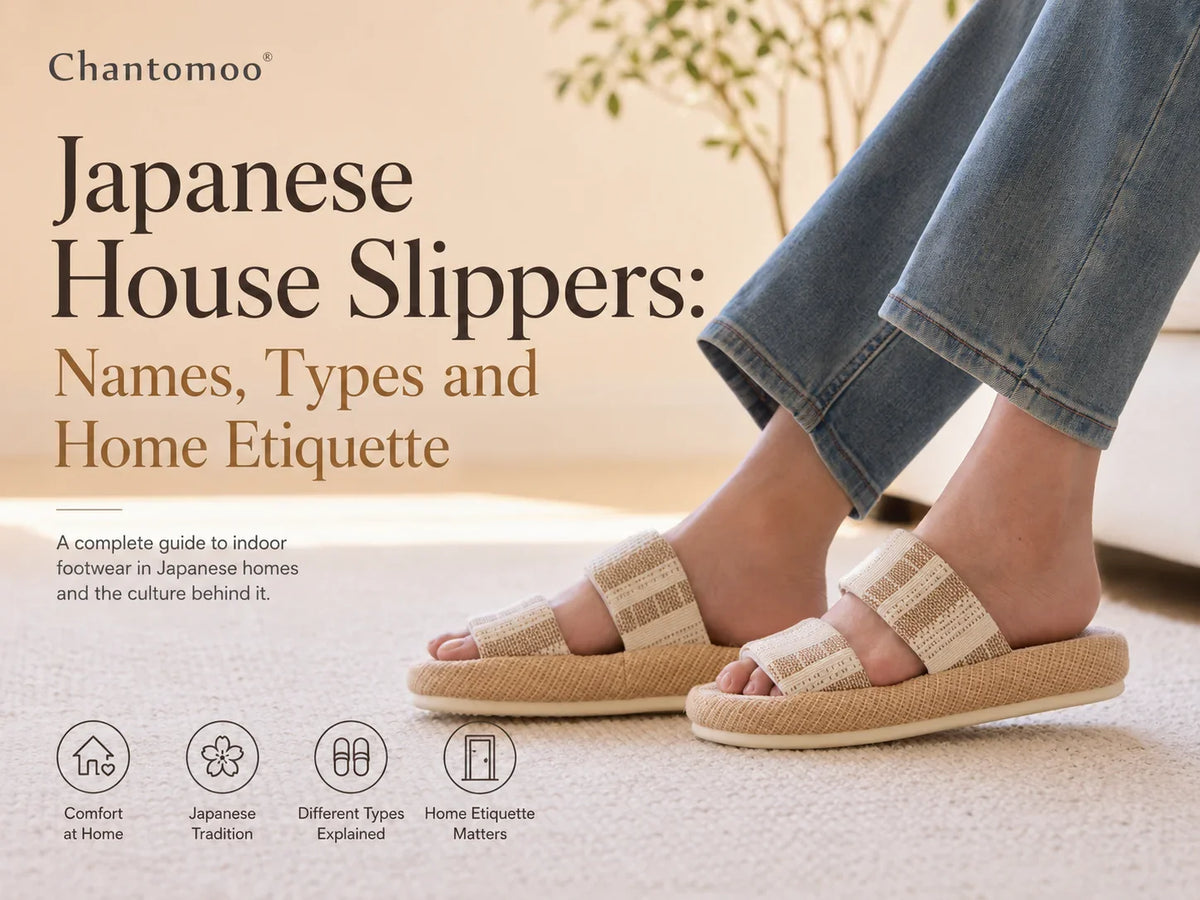


If you have ever entered a Japanese home, hotel, traditional inn, or restaurant, you may have noticed one quiet habit at the entrance: outdoor shoes are removed before stepping into the main indoor space.
In many homes, indoor slippers are then offered for walking across hard floors, hallways, and living areas. This simple routine reflects a thoughtful separation between the outside world and the comfort of home.
So, what are Japanese house slippers called? The most common everyday answer is surippa, written in Japanese as スリッパ. The word comes from the English word “slipper,” but in Japan it usually refers to lightweight indoor slippers that are easy to slip on and remove.
For the soft, open-back slippers commonly worn around the home, the correct everyday term is surippa. These slippers are usually placed near the entrance for residents or guests and are also commonly found in hotels, traditional inns, clinics, offices, restaurants, and other indoor spaces.
Surippa are often made from:
Today, many shoppers use the phrase Japanese house slippers more broadly. They may not be looking for traditional footwear, but for slippers that feel calm, simple, easy to wear, and suitable for a clean indoor lifestyle.
Chantomoo Indoor Comfort
For a modern interpretation of this easy slip-on home style, explore the Chantomoo Japanese House Slippers Collection.
These slippers combine simple silhouettes, soft footbeds, and lightweight soles, making them easy to wear while moving between rooms. Their understated appearance works especially well with calm, uncluttered home interiors.

Best for: Bedrooms, living rooms, guest rooms, home offices, slow mornings, and relaxed evenings at home.
How to style them: Pair neutral Japanese-inspired slippers with cotton pajamas, linen loungewear, soft robes, knit sets, or simple home clothing for a comfortable and coordinated indoor look.
Uwabaki, written as 上履き, are dedicated indoor shoes, but they are different from ordinary house slippers.
They are most commonly associated with Japanese schools, where students change from outdoor shoes into clean indoor footwear before entering classrooms. Uwabaki are also sometimes worn in hospitals, offices, gyms, and other shared buildings.
Unlike open-back surippa, uwabaki usually have:
For this reason, uwabaki are better described as Japanese indoor shoes rather than casual house slippers.
Zori are traditional flat Japanese sandals, usually featuring a thong-style strap between the toes. They may be made from straw, cloth, rubber, vinyl, or other materials and are often worn with kimono or yukata.
Nuno zori are cloth sandals inspired by traditional zori. Their woven construction gives them a soft, handcrafted appearance, and some versions are worn indoors.
Geta are raised wooden sandals traditionally worn outdoors. They are not house slippers.
| Name | Typical Use | Common Design |
|---|---|---|
| Surippa | Homes, hotels, and indoor spaces | Lightweight and often open-back |
| Uwabaki | Schools and shared buildings | Closed-toe indoor shoe |
| Zori | Traditional or casual wear | Flat sandal with a thong strap |
| Nuno Zori | Casual indoor wear | Woven cloth sandal |
| Geta | Traditional outdoor wear | Raised wooden sandal |
Japanese homes traditionally separate outdoor and indoor areas. At the entrance is a lowered space called the genkan, where outdoor shoes are removed before entering the main living area.
This helps reduce the dirt, dust, and moisture carried into the home. Indoor slippers may then be worn on hard flooring. Some homes and establishments also provide a separate pair of slippers for the bathroom.
This habit is one reason Japanese-style house slippers are often associated with clean, quiet, intentional home living.
Usually, slippers should be removed before stepping onto real tatami mats.
Traditional tatami flooring is normally walked on in socks or bare feet. Slipper soles may catch, mark, or damage the woven surface.
The shopping term tatami slippers can therefore be slightly confusing. It usually describes slippers with woven or straw-like footbeds rather than slippers intended to be worn directly on tatami flooring.
Woven-Inspired Comfort
The Chantomoo Tatami Slippers Collection offers modern slippers inspired by woven textures and relaxed Japanese home aesthetics.
The woven-style footbeds create a natural look, while the lightweight construction makes the slippers suitable for everyday indoor use. Open designs may also feel more breathable than fully enclosed house shoes.

Best for: Warm-weather indoor wear, kitchens, bedrooms, guest rooms, casual lounging, and homes with hard flooring.
How to style them: Wear tatami-style slippers with linen trousers, cotton shorts, lightweight dresses, pajamas, or neutral loungewear. Natural colors and simple fabrics complement their woven appearance.
Modern Japanese-inspired slippers often focus on simplicity and function rather than heavy decoration.
Common design details include:
These designs are inspired by the calm and practical feel of Japanese interiors, but they should not automatically be described as traditional zori, geta, or uwabaki.
When choosing a pair, consider where and how you plan to wear them. A slipper for occasional guest use may be different from a pair you wear every morning, every evening, and throughout the day at home.
| Feature | Why It Matters |
|---|---|
| Breathable Materials | Helpful for warm homes, summer wear, and open-toe comfort. |
| Cushioned Footbed | Makes hard floors feel softer during everyday indoor movement. |
| Lightweight Outsole | Keeps slippers easy to wear throughout the day. |
| Open-Back Design | Makes slippers convenient to slip on and remove near the entrance or bedroom. |
| Simple Styling | Neutral colors and clean shapes pair easily with home clothing. |
Always check the individual care instructions, especially for woven or fabric styles that may require spot cleaning, gentle washing, or air drying.

Chantomoo Japanese-Inspired Home Comfort
Explore soft, lightweight, easy-to-wear slippers inspired by calm indoor living, woven textures, and relaxed everyday routines.
Shop Japanese House Slippers Shop Tatami SlippersOrdinary Japanese house slippers are commonly called surippa, written in Japanese as スリッパ.
Surippa are casual slippers commonly worn at home, while uwabaki are more structured indoor shoes frequently worn in schools and shared buildings.
Zori are traditional Japanese sandals. Modern house slippers are more commonly called surippa.
Traditional woven cloth sandals may be called nuno zori. Modern retailers may also use terms such as woven Japanese slippers or tatami-style slippers.
Slippers are normally removed before stepping onto real tatami mats. Socks or bare feet are generally preferred.
No. Geta are traditional raised wooden sandals usually worn outdoors.
The most common name for Japanese house slippers is surippa. Uwabaki are structured indoor shoes commonly worn in schools, while zori, nuno zori, and geta refer to other traditional or specialized footwear styles.
Modern “Japanese house slippers” and “tatami slippers” usually describe lightweight indoor footwear inspired by simple shapes, woven textures, easy slip-on design, and relaxed Japanese home aesthetics.
For everyday indoor comfort, explore the Chantomoo Japanese House Slippers Collection and the Chantomoo Tatami Slippers Collection to find a soft, simple pair that fits naturally into your home routine.
Because women may be more prone to stress fractures, choosing the right slippers is not just about comfort. A good pair should cushion your steps, support your feet, and help make everyday movement at home easier on your body


